![]() Image 1 of 1
Image 1 of 1
Old field goldenrod starter plant (Solidago nemoralis).
Old field goldenrod starter plant (Solidago nemoralis). This goldenrod is a very easy plant, growing in barren spots where almost nothing but weeds will. It is also much shorter than other goldenrods, getting under 2 ft which makes it a great choice to go with short grass prairie or savannah types areas. Lastly, goldenrod blooms in late summer/ fall which coincides with monarch migration, making it a great choice for late season butterfly activity.
All of our plants are grown in biodegradable fabric pots. The containers are around 4"x4 1/2" Generally, I like to take them off and compost them, but if you leave them on, I like to rip the sides or score them with a knife for easier root penetration.
Tips for growing:
As our plants are intended for pollinator gardens, they have not been treated with anything. Native plants don't need any fertilizer, but if you want to lightly use an organic fertilizer, it won't hurt.
The best place for our plants is in the ground. Do not grow in black plastic nursery pots "till they get bigger" Black plastic pots do not provide good aeration, get very hot, and will cause root circling and poor growth. Although being small, native plants often grow extensive root systems, often more than the visible foliage. When planted in the ground they will have the best chance to work on their roots.
When it comes to native perennials, roots are the most important part. While foliage can be an indicator of good growth, you want to give these plants the best chance for root growth. Don't worry about flowering, it will come. Encourage roots!
We take care in packing our plants for shipping, but plants occasionally get bent, broken stems in transit. This can appear disappointing, but they have good roots and will quickly recover.
• Any questions, feel free to contact us. We want this to be an enjoyable experience.
Old field goldenrod starter plant (Solidago nemoralis). This goldenrod is a very easy plant, growing in barren spots where almost nothing but weeds will. It is also much shorter than other goldenrods, getting under 2 ft which makes it a great choice to go with short grass prairie or savannah types areas. Lastly, goldenrod blooms in late summer/ fall which coincides with monarch migration, making it a great choice for late season butterfly activity.
All of our plants are grown in biodegradable fabric pots. The containers are around 4"x4 1/2" Generally, I like to take them off and compost them, but if you leave them on, I like to rip the sides or score them with a knife for easier root penetration.
Tips for growing:
As our plants are intended for pollinator gardens, they have not been treated with anything. Native plants don't need any fertilizer, but if you want to lightly use an organic fertilizer, it won't hurt.
The best place for our plants is in the ground. Do not grow in black plastic nursery pots "till they get bigger" Black plastic pots do not provide good aeration, get very hot, and will cause root circling and poor growth. Although being small, native plants often grow extensive root systems, often more than the visible foliage. When planted in the ground they will have the best chance to work on their roots.
When it comes to native perennials, roots are the most important part. While foliage can be an indicator of good growth, you want to give these plants the best chance for root growth. Don't worry about flowering, it will come. Encourage roots!
We take care in packing our plants for shipping, but plants occasionally get bent, broken stems in transit. This can appear disappointing, but they have good roots and will quickly recover.
• Any questions, feel free to contact us. We want this to be an enjoyable experience.
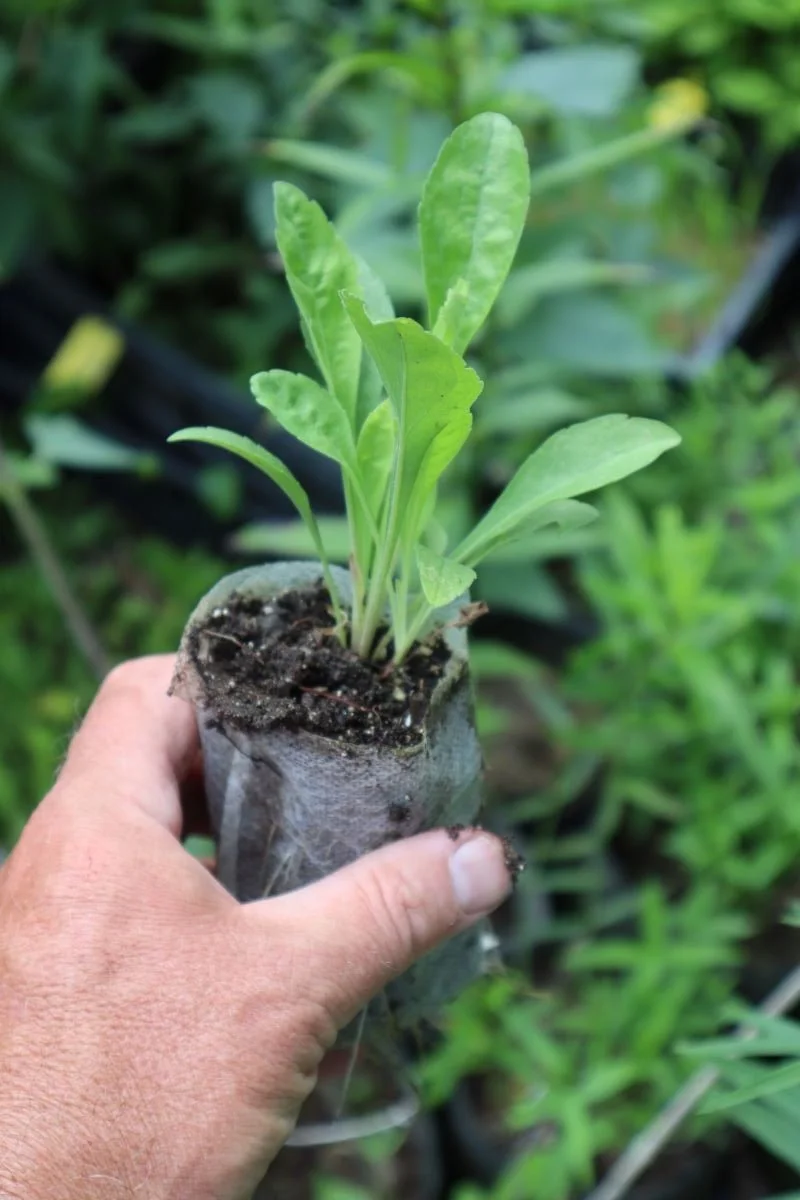 Image 1 of 1